Spring is a quieter time to visit Acadia National Park, offering an opportunity to explore its coastline, forests, and mountain scenery before the busy summer season. The changing landscape and fewer visitors make it an appealing season for a peaceful park experience.
However, spring conditions can vary considerably. March and early April may bring cold weather, muddy trails, and seasonal closures, while May generally offers milder temperatures and better access to popular attractions. Knowing what to expect can help you plan your visit.
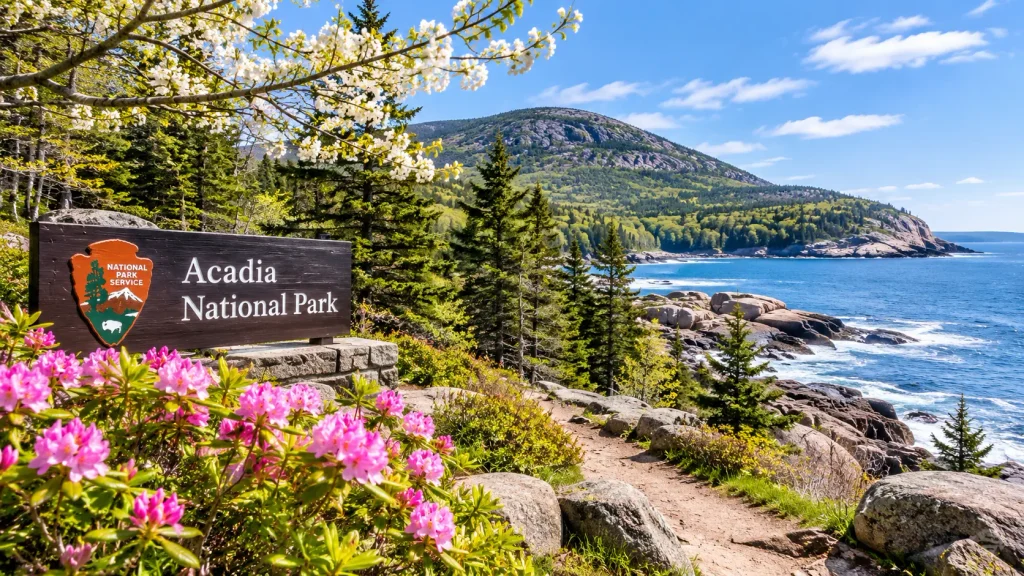
Table of Contents
What Is Spring Like in Acadia National Park?
Spring in Acadia National Park is a season of gradual change, as the landscape shifts from winter conditions to the greener scenery of summer. Snow begins to melt across Mount Desert Island, streams gain water from snowmelt and rainfall, and woodland plants start producing fresh growth. Along the coastline, visitors can enjoy rocky shores, ocean views, and quieter surroundings before the busy summer season arrives. The park’s forests, ponds, mountains, and coastal areas each take on a slightly different character as spring progresses.
March and early April are often the most challenging months for outdoor activities. Snow and ice can linger on higher trails, shaded paths may remain slippery, and thawing ground can become muddy. Some park roads, facilities, and recreational areas also remain seasonally closed during this period. Conditions can differ considerably between the coast and mountain elevations, so a trail that is clear near sea level may still have icy sections farther uphill.
By late April and May, Acadia gradually becomes more inviting for visitors. Forests begin to turn green, spring flowers appear, migratory birds become more active, and more seasonal facilities reopen. Waterfalls and streams can also become more noticeable as snowmelt and rainfall feed the park’s waterways. Although temperatures generally become milder, spring weather remains changeable, and cold, foggy, or rainy days are still possible.
One of the biggest advantages of visiting Acadia in spring is the opportunity to experience the park without the peak summer crowds. You can enjoy scenic coastal viewpoints, explore accessible trails, and watch the landscape come back to life at a slower pace. However, flexibility is essential because trail conditions, road access, and facility opening dates vary throughout the season.
Acadia National Park Spring Weather and Temperature
Spring weather in Acadia National Park can change considerably from one day to the next. Located along the coast of Maine, the park experiences a maritime climate influenced by the cold Atlantic Ocean. Visitors may encounter sunny afternoons, chilly mornings, rain, strong coastal winds, and fog, sometimes within the same visit. The National Park Service gives a broad spring temperature range of 30°F to 70°F (-1°C to 21°C), although actual conditions depend on the month, elevation, and weather pattern.
Temperatures generally rise from March through May, but spring does not arrive uniformly across Mount Desert Island. Coastal areas and Bar Harbor can feel milder than the park’s higher elevations. Cadillac Mountain and other exposed summits are often colder and windier, so a comfortable afternoon near the shoreline does not necessarily mean suitable conditions for a mountain hike.
Rain is possible throughout spring, and fog can reduce visibility along the coastline and mountain viewpoints. Snowfall can also continue into April, while lingering snow and ice may remain on shaded trails after warmer days have begun. Checking the forecast and current park conditions before heading out is particularly important during this transitional season.
March Temperatures
March is generally the coldest month of spring in Acadia National Park. Average daytime highs around the Acadia and Bar Harbor area are approximately 42°F (6°C), while nighttime lows average about 25°F (-4°C). Temperatures can still feel wintry, particularly during cloudy, windy, or snowy weather.
Snow and ice may remain on hiking trails, especially at higher elevations and in shaded areas. Freezing nights can also keep paths slippery even when daytime temperatures rise above freezing. Visitors planning a March trip should be prepared for cold conditions, muddy ground, and limited access to some seasonal facilities and recreational areas.
April Temperatures
April brings a noticeable increase in temperatures, with average highs around 53°F (12°C) and lows near 35°F (2°C). Days gradually become milder, and snow begins to disappear from many lower-elevation areas. However, early April can still feel like an extension of winter, particularly in the mornings and at higher elevations.
Rain, fog, and occasional late-season snow remain possible. Melting snow and spring rainfall can leave unpaved surfaces muddy and some trails wet or slippery. Conditions usually improve as the month progresses, but visitors should not assume that every trail, road, or park facility will be accessible.
May Temperatures
May is generally the mildest month of spring in Acadia, with average daytime highs around 65°F (18°C) and nighttime lows near 45°F (7°C). Warmer afternoons make coastal walks and many lower-elevation hikes more comfortable, although mornings and evenings can still be cool.
The landscape also becomes noticeably greener during May. Trees develop fresh leaves, spring flowers begin appearing, and migratory birds become more active. Rain and fog remain part of the coastal weather pattern, and exposed mountain areas can still feel considerably colder than the shoreline. Late May is usually more comfortable for outdoor activities than March or early April, but visitors should continue to prepare for changing conditions.
Spring Closures and Access in Acadia National Park
Acadia National Park remains open throughout the year, but access to its roads, hiking trails, campgrounds, and visitor facilities changes with the seasons. Spring is a transition period when some areas gradually reopen after winter, while others remain closed because of muddy ground, maintenance work, or wildlife protection. As a result, visitors planning a spring trip should check the National Park Service’s current conditions and operating schedules before choosing their activities.
The Park Loop Road is one of the most important seasonal access routes in Acadia. Most of this 27-mile (43-km) scenic road closes to motor vehicles from December 1 through April 14 and is scheduled to reopen on April 15, weather permitting. The road provides access to popular destinations such as Sand Beach, Thunder Hole, Otter Point, Jordan Pond, and Cadillac Mountain. During the winter closure, two short sections remain accessible to vehicles: the Ocean Drive section near Schooner Head and Otter Cliff, and the road providing access to Jordan Pond. Additional temporary closures may occur during spring because of construction, maintenance, or weather conditions.
Acadia’s historic carriage roads also experience seasonal closures during spring mud season. Although the carriage road network is maintained for year-round recreational use when conditions allow, the National Park Service may temporarily close some or all sections during the spring thaw. Melting snow and saturated ground make the crushed-stone surfaces particularly vulnerable to damage from bicycles, horses, and foot traffic. These closures remain in effect until the surfaces are firm enough for safe use. Visitors should respect posted restrictions rather than attempting to bypass closed gates.
Some hiking trails are also closed in spring to protect nesting peregrine falcons. These temporary restrictions can affect popular routes, including the Precipice, Jordan Cliffs, Penobscot East, and Valley Cove trails. Peregrines nest on Acadia’s coastal and mountain cliffs, and human activity near nesting sites can disturb adult birds and put their chicks at risk. The timing and exact locations of trail closures may vary, so checking current park alerts is important before planning a hike.
Campgrounds, visitor centers, picnic areas, and other facilities reopen on different schedules throughout April and May. For example, Blackwoods Campground and the Hulls Cove Visitor Center have typically opened in early May, while Seawall and Schoodic Woods campgrounds generally open later in the month. Restaurants, stores, and other visitor services may have separate opening dates. Do not assume that every facility will be operating simply because the main park roads have reopened.
Before visiting, check Acadia’s official Operating Hours and Seasons page for opening schedules and its Current Conditions page for temporary road, trail, and facility closures. This is especially useful during early spring, when access can change quickly as snow melts and maintenance work progresses.
Things to Do in Acadia National Park in Spring
Spring offers several ways to explore Acadia National Park, from walking along its rocky Atlantic coastline to discovering waterfalls, hiking forest trails, and watching migratory birds. As snow melts and the landscape becomes greener, many of the park’s natural attractions become especially enjoyable. However, activities depend on weather, trail conditions, and seasonal access. Some trails may remain icy or muddy, and carriage roads can be temporarily closed during mud season.
Explore the Park Loop Road and Scenic Coastline
The Park Loop Road is one of the best ways to experience Acadia’s coastal scenery. This 27-mile (43-km) route connects several popular attractions, including Sand Beach, Otter Point, Thunder Hole, and Jordan Pond. Most of the road typically reopens to motor vehicles in mid-April, weather permitting, making late spring a good time to explore its scenic stops.
Sand Beach is a beautiful place to enjoy the contrast between its sandy shoreline, rocky headlands, and cold Atlantic waters. Further along Ocean Drive, Otter Point offers sweeping coastal views and opportunities to watch seabirds. Thunder Hole is another popular stop, where incoming waves can rush into a narrow rock inlet and produce a loud booming sound. The effect depends on wave size, direction, and ocean conditions, so the sound is not guaranteed. Always remain behind designated safety barriers because waves can sweep across the rocks unexpectedly.
Go Hiking on Acadia’s Scenic Trails
Hiking is one of the most rewarding spring activities in Acadia, particularly on lower-elevation and coastal trails that become accessible earlier than some mountain routes. Wonderland Trail and Ship Harbor Trail are two good options on the quieter western side of Mount Desert Island. Wonderland Trail is an easy walk of about 1.4 miles (2.3 km) round trip, leading through woodland to a rocky shoreline with tidal pools. Ship Harbor Trail is approximately 1.3 miles (2.1 km) long and forms a loop through forest and coastal scenery.
For visitors looking for a more challenging walk, Great Head Trail offers a roughly 1.5-mile (2.4-km) loop with rocky sections and impressive views of Sand Beach and the surrounding coastline. The Jordan Pond Path is another popular choice, following the shoreline beneath the distinctive North and South Bubbles. The complete loop is about 3.2 miles (5.1 km) and includes uneven sections, rocks, and wooden bridges, so it should not be treated as an easy, flat walk.
Spring hikers should check current trail conditions before setting out. Higher elevations and shaded sections can retain ice even when coastal paths are clear. Waterproof footwear, warm layers, and traction devices may be useful during early spring.
See Spring Waterfalls and Cascades
Spring is one of the best times to look for waterfalls and small cascades in Acadia because melting snow and seasonal rainfall increase water flow in the park’s streams. Unlike large waterfalls that maintain a relatively steady flow, many of Acadia’s cascades respond quickly to changing weather. They can be especially impressive after snowmelt or heavy rain, but their flow may decrease during dry periods.
Hadlock Falls is a well-known waterfall along Hadlock Brook and can be viewed near the historic Waterfall Bridge. Chasm Brook Falls features an approximately 25-foot (7.6-m) drop near a carriage road bridge, while Canon Brook has several smaller cascades and water slides along its course. These spots offer a different perspective on Acadia’s landscape beyond its famous ocean views.
Access is important when planning a waterfall visit. Some waterfalls, including Chasm Brook Falls and Hadlock Falls, are reached by carriage roads that may remain closed during mud season. Wait until the National Park Service reopens the relevant routes, and take extra care around wet rocks and slippery stream banks.
Visit Jordan Pond and Explore the Carriage Roads
Jordan Pond is one of Acadia’s most recognizable natural attractions. Surrounded by forested slopes and the distinctive twin peaks known as the Bubbles, the clear glacial lake provides beautiful scenery throughout spring. Visitors can enjoy the views from the shoreline, explore nearby trails, or take photographs of the mountains reflected in the water on calm days.
The historic carriage roads offer another way to experience the park. Built through the generosity of John D. Rockefeller Jr., this network extends for approximately 45 miles (72 km) across Acadia. Its crushed-stone surfaces, graceful stone bridges, and forested surroundings make it popular for walking, cycling, and horseback riding where permitted. Several routes connect with the Jordan Pond area, allowing visitors to combine lakeside scenery with a longer outing.
Keep in mind that carriage roads are particularly vulnerable during the spring thaw. The National Park Service may temporarily close sections until the surfaces are firm enough to prevent damage, so check current conditions before planning a walk or bike ride.
Visit Cadillac Mountain
Cadillac Mountain is one of Acadia’s most famous destinations and offers expansive views of the surrounding islands, forests, coastline, and Atlantic Ocean. Its summit rises 1,530 feet (466 m) above sea level, making it the highest point on the eastern seaboard of the United States. On clear spring days, visitors can enjoy wide-ranging views across Frenchman Bay and the surrounding landscape.
The summit can feel much colder and windier than lower areas of the park, and fog may sometimes obscure the views. Conditions can change quickly, so bring warm clothing even if the weather near the coast feels mild. Visitors driving the Cadillac Summit Road during its seasonal reservation period must obtain a vehicle reservation in advance. Check the National Park Service website for the current dates and requirements before visiting.
Visit Spring Gardens and See Wildflowers
Spring brings fresh growth and seasonal color to the gardens around Mount Desert Island. The Wild Gardens of Acadia, located in the Sieur de Monts area, showcases native plants in a setting designed to represent the park’s different natural habitats. Its collection includes more than 400 plant species, making it an interesting stop for visitors who want to learn about Acadia’s native vegetation.
Another beautiful destination is Asticou Azalea Garden in Northeast Harbor, just outside the national park. This Japanese-inspired garden features carefully arranged paths, ponds, rocks, and flowering plants. Azaleas and other spring blooms add seasonal color, particularly as May progresses. Flowering times vary with weather, so the garden may look different from one visit to the next.
Wildflowers can also be found along suitable woodland and coastal habitats throughout the region. Stay on established paths and avoid picking flowers or stepping into protected vegetation so that these plants can continue to grow.
Go Birdwatching and Watch Wildlife
Spring is an excellent season for birdwatching in Acadia as migratory birds return to Maine and become active across the park’s forests, ponds, wetlands, and coastline. Jordan Pond is a good place to look for loons and songbirds, particularly during quieter morning hours. Other recommended birdwatching areas include Schoodic Peninsula, Seawall, Sieur de Monts, Wonderland and Ship Harbor trails, and Otter Point.
Visitors may also encounter white-tailed deer, wild turkeys, squirrels, and other wildlife while exploring the park. Animals are more likely to be seen when visitors move quietly and maintain a respectful distance. Bring binoculars for birdwatching, never feed wildlife, and avoid approaching animals for photographs.
Visit Bass Harbor Head Lighthouse
Bass Harbor Head Lighthouse is one of Acadia’s best-known coastal landmarks. Located on the southwestern side of Mount Desert Island, the lighthouse stands above a rocky shoreline overlooking the Atlantic Ocean. Its white tower, red roof, and surrounding evergreen trees create a distinctive coastal scene.
Spring can be a pleasant time to visit because the area is generally quieter than during the peak summer season. Visitors can follow the short access path to the lighthouse viewpoint and, when conditions permit, use the designated stairs to reach the rocky shoreline for a closer view. The rocks can be slippery, particularly after rain or when waves splash over them, so use caution and remain aware of changing ocean conditions.
When Is the Best Time to Visit Acadia National Park in Spring?
The best time to visit Acadia National Park in spring depends on what you want to experience. March and early April are suitable for travelers who prefer quieter surroundings and do not mind cold weather, muddy trails, and limited seasonal access. Late April offers a gradual improvement in conditions as more roads and facilities reopen. May is generally the most convenient spring month for sightseeing, hiking, wildflower viewing, and birdwatching, although some trails and facilities may still have restrictions.
Visiting Acadia in March
March is best suited to visitors seeking solitude and a winter-like coastal experience. Snow, icy trails, cold temperatures, and occasional snowfall can make outdoor activities more challenging. Many seasonal roads, campgrounds, and visitor facilities remain closed, while carriage roads may be inaccessible because of muddy conditions.
Visitors can still enjoy accessible coastal areas, scenic winter landscapes, and quieter viewpoints, provided they check road conditions and prepare for cold weather. March is not the best choice if you want to explore a wide range of hiking trails or use the park’s seasonal facilities.
Visiting Acadia in April
April offers a transition between winter and the more active spring season. Temperatures gradually rise, snow begins melting in lower areas, and the Park Loop Road is generally scheduled to reopen to most motor vehicles on April 15, weather permitting. This makes it easier to reach popular coastal attractions such as Sand Beach, Otter Point, and Thunder Hole.
However, early April can still bring icy trails, muddy ground, rain, and occasional snow. Some carriage roads and hiking trails may remain closed, and seasonal facilities reopen on different dates. Late April is generally a better choice than early April for visitors hoping to combine sightseeing with outdoor activities.
Visiting Acadia in May
May is generally the best overall month for a spring visit to Acadia National Park. The weather is milder, forests become greener, wildflowers begin appearing, and migratory birds become more active. More roads, campgrounds, visitor facilities, and seasonal services also reopen, giving visitors greater flexibility when planning their trips.
Many lower-elevation trails and coastal attractions are more comfortable to explore during May, although higher mountain routes can still have cold, windy, or wet conditions. Early May may also bring muddy trails and lingering seasonal restrictions, while conditions generally become more favorable later in the month.
May is not completely free of crowds, but visitor numbers are usually lower than during the peak summer season. For a combination of milder weather, better access, spring scenery, and relatively quieter surroundings, late May is often the most rewarding time to visit.
Is Acadia National Park Worth Visiting in Spring?
Yes, Acadia National Park is worth visiting in spring, especially if you enjoy quieter landscapes, changing seasonal scenery, and outdoor experiences without the peak summer crowds. As winter fades, melting snow feeds streams and waterfalls, forests begin to turn green, wildflowers emerge, and migratory birds return to the island. The coastline also offers a different atmosphere, with cool ocean breezes, crashing waves, and fog drifting across rocky headlands.
Spring does require some flexibility. Cold mornings, rain, fog, muddy trails, lingering ice, and seasonal road or facility closures can affect travel plans. Some higher-elevation hikes may remain difficult, while carriage roads and nesting-protection trail closures can limit access to particular areas. Checking the weather forecast and National Park Service alerts before each outing helps avoid unexpected disruptions.
For visitors who want milder weather and better access to popular attractions, May is generally the most convenient spring month. Those who prefer greater solitude may enjoy March or early April, provided they are comfortable with winter-like conditions. Late April offers a middle ground as the park gradually reopens for the warmer season.
Ultimately, spring reveals a quieter side of Acadia. Whether you are exploring the scenic coastline, walking around Jordan Pond, watching birds, photographing waterfalls, or enjoying the views from Cadillac Mountain, the season offers plenty of reasons to visit. With some planning and flexibility, a spring trip to Acadia can be a rewarding experience.