Times Square is one of the most recognizable places in New York City, but its name has a surprisingly specific origin. The bright screens, Broadway theaters, huge crowds, and New Year’s Eve celebrations make it easy to think of “Times Square” simply as the name of a famous place. But the word “Times” actually comes from The New York Times, one of America’s most influential newspapers.
Long before it became Times Square, the area was known as Longacre Square. At the beginning of the 20th century, however, the neighborhood was changing rapidly. New York was expanding northward, new transportation links were transforming Manhattan, and The New York Times was preparing to move its headquarters to a prominent site near 42nd Street.
That move would change the identity of the area permanently. In 1904, Longacre Square was officially renamed Times Square, linking the location to the newspaper and its new headquarters. Although The New York Times eventually moved away from the building, the name remained and became associated with one of the world’s most famous public spaces.
But why did the newspaper choose this location, and how exactly did Longacre Square become Times Square? Understanding the name requires looking at the neighborhood before it became famous, the rise of The New York Times, the construction of the Times Building, and the events surrounding the 1904 renaming.
This is the story of how Longacre Square became Times Square—and why the name has remained for more than a century.
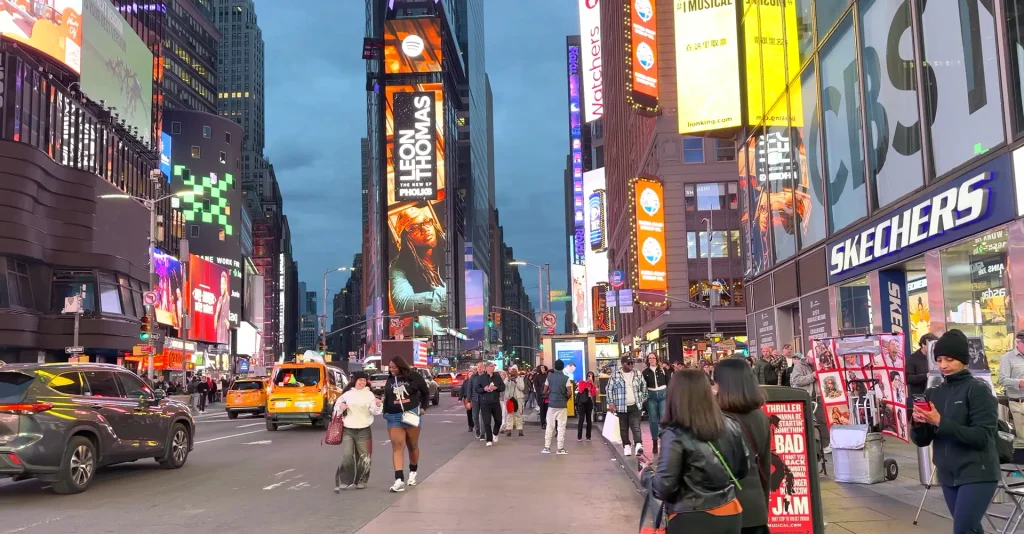
Table of Contents
Before Times Square Existed
Before it became known as Times Square, the area around present-day 42nd Street and Broadway was known as Longacre Square. In the 19th century, it was a developing part of Manhattan with an identity very different from the bright, crowded entertainment district that exists today.
Longacre Square became particularly associated with carriage manufacturing and the horse-drawn transportation industry. Carriage makers, dealers, repair shops, stables, and businesses serving the transportation trade operated in and around the area. This activity gave the neighborhood its distinctive character during much of the 19th century.
The area’s location also became increasingly important as Manhattan expanded northward. Broadway ran through the neighborhood, while new roads, transportation services, and commercial development gradually made the area more accessible and attractive for businesses.
By the late 19th century, however, Longacre Square was beginning to change. The growth of Manhattan was pushing commercial activity farther north, and the neighborhood was becoming increasingly suitable for offices, businesses, entertainment venues, and other forms of development.
This transformation was about to accelerate. At the beginning of the 20th century, The New York Times was looking for a prominent location for a new headquarters, and Longacre Square offered a strategic site in a rapidly developing part of Manhattan.
The arrival of the newspaper would eventually give the area a new identity—and lead to the name Times Square.
The Rise of The New York Times
By the late 19th century, The New York Times had established itself as an important newspaper in New York City. Founded in 1851, the newspaper had grown in readership and influence, and its expanding operations eventually created a need for a larger headquarters.
At the beginning of the 20th century, the newspaper was led by publisher Adolph S. Ochs, who had acquired control of The New York Times in 1896. Under his leadership, the newspaper continued to expand and sought a location that could accommodate its growing operations while giving it a more prominent presence in the city.
New York itself was also changing rapidly. Manhattan’s development was moving northward, and areas that had once been on the outskirts of the city’s main commercial activity were becoming increasingly important. Longacre Square was one of these developing areas.
For Ochs, establishing the newspaper in this part of Manhattan offered an opportunity to build a substantial new headquarters in a prominent location. The plan was to construct a tall building that would house the newspaper’s offices and printing operations while placing The New York Times at the center of a rapidly developing part of the city.
The decision would have consequences beyond the newspaper itself. The new headquarters would become a major landmark, and its location near 42nd Street would help give Longacre Square a new identity.
That building would become known as the Times Building, and its connection with The New York Times would soon play a central role in the renaming of Longacre Square as Times Square.
A Strategic Move Uptown
For The New York Times, moving to Longacre Square was more than a search for additional office space. The location offered a prominent position in a part of Manhattan that was rapidly gaining importance as the city continued to expand northward.
Longacre Square stood at the intersection of important streets, including Broadway and Seventh Avenue, and was becoming increasingly accessible as New York’s transportation network developed. Its location near 42nd Street also placed the newspaper in an area with significant potential for future commercial growth.
One of the most important developments was the expansion of New York’s subway system. A new subway station was planned beneath the newspaper’s proposed headquarters, which would make the location easier to reach and help increase the number of people passing through the area.
The newspaper’s new headquarters was designed as a prominent skyscraper, giving The New York Times a highly visible presence in the city. The building’s height and location would also make it an important landmark for people traveling through Manhattan.
This combination of a prominent location, growing transportation connections, and the rapid development of this part of Manhattan made Longacre Square an attractive place for the newspaper to establish its new headquarters.
The move would have an effect far beyond the newspaper itself. The new building soon became strongly associated with The New York Times, creating the connection that would lead to one of the most recognizable name changes in New York City history.
The Renaming of Longacre Square
The connection between The New York Times and Longacre Square became official in 1904. As the newspaper prepared to establish its new headquarters near 42nd Street, the growing importance of the location led to a proposal to give the area a new name associated with the newspaper.
On April 8, 1904, New York City officially renamed Longacre Square Times Square. The new name referred to The New York Times, whose planned headquarters had become a prominent part of the area’s development.
The timing was significant. The newspaper’s new headquarters, known as the Times Building, was being constructed at a highly visible location between Broadway and Seventh Avenue. At the same time, New York’s expanding subway system was making the area an increasingly important transportation center.
The name change therefore connected the rapidly developing neighborhood with one of New York’s most prominent newspapers. Longacre Square, which had previously been associated with the city’s carriage trade, now had a name linked to the newspaper and its impressive new headquarters.
The renaming did not mean that The New York Times owned the area or that the newspaper itself had the authority to name the square. New York City officially changed the name, while the newspaper’s new headquarters provided the connection behind that name.
From that point forward, the name Times Square became increasingly established. Even after the newspaper eventually moved away, the name remained attached to the location and would become one of the most recognizable place names in New York City.
The Newspaper Leaves, but the Name Remains
The New York Times did not remain at its Times Building forever. In 1913, the newspaper moved its headquarters to a new building farther north on Eighth Avenue. By that time, however, the name Times Square had already become firmly established.
The departure of the newspaper did not lead to the return of the old name, Longacre Square. Instead, Times Square remained the official name of the area as the neighborhood continued to develop and change.
The original headquarters also continued to be associated with the name. The Times Building later became known as One Times Square, and the surrounding area gradually developed into a major center for Broadway, entertainment, tourism, and advertising. Over time, Times Square became far more famous than the newspaper connection that originally gave it its name.
This is an important part of the story because The New York Times has not been headquartered in Times Square for more than a century. The word “Times” in Times Square is therefore a historical reference to the newspaper, not an indication that the newspaper currently owns or operates the square.
The name survived because it had already become firmly established as the identity of the area. As Times Square continued to evolve, the original connection to The New York Times became part of its history.
In short, The New York Times left the area, but the name remained. What began as a reference to a newspaper and its new headquarters eventually became the permanent name of one of the world’s most recognizable places.