Times Square is one of the most famous places in the world, but a seemingly simple question about it has a surprisingly complicated answer: Who actually owns Times Square?
The short answer is that no single person, company, or organization owns Times Square as a whole. The streets, sidewalks, and pedestrian plazas that make up its public spaces are under the authority of New York City, while the buildings, hotels, theaters, offices, stores, and other commercial properties surrounding them are owned by numerous private property owners.
The distinction between ownership, management, and control is important. A visitor standing in the middle of a Times Square pedestrian plaza is in a public space, while the buildings surrounding that plaza may be privately owned. The famous electronic billboards add another layer because the companies advertising on them generally do not own the buildings or the advertising structures themselves.
The Times Square Alliance, a nonprofit organization that works to improve and promote the district, also plays an important role in maintaining and managing designated pedestrian plaza areas. However, its management responsibilities do not make it the owner of Times Square.
So, who owns the land and streets in Times Square? Who owns the buildings and famous billboards? And how does New York City share management of this world-famous destination with private property owners and the Times Square Alliance?
This guide explains who owns, manages, and controls the different parts of Times Square—and why there is no single owner of the entire area.
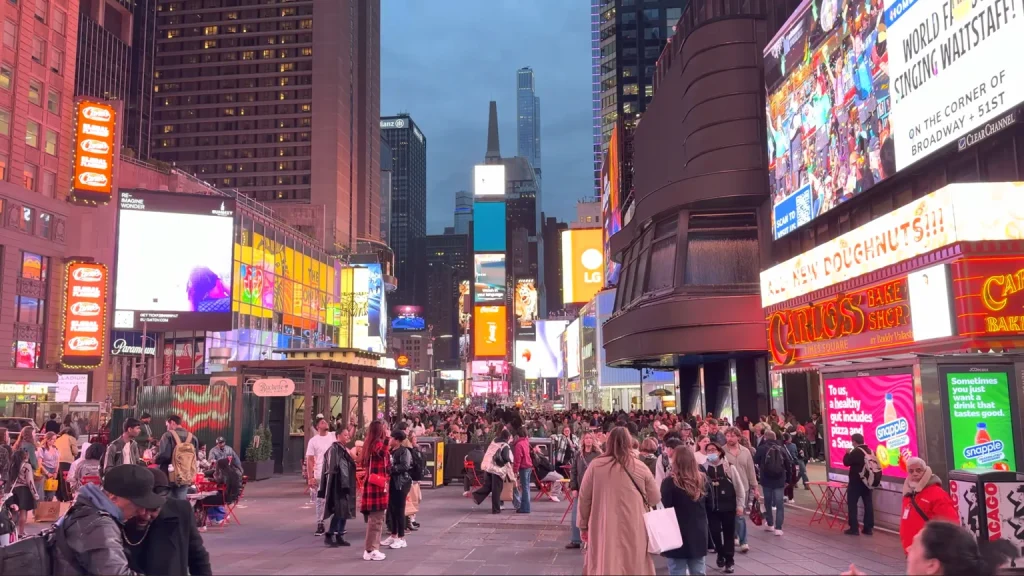
Table of Contents
Is Times Square Owned by New York City?
Not entirely. New York City has authority over the public streets, sidewalks, and pedestrian plaza areas that make up the public realm of Times Square, but the city does not own all of the buildings and commercial properties that people associate with the destination.
The iconic core of Times Square is centered around Broadway and Seventh Avenue, particularly the area between West 42nd Street and West 47th Street. Much of the space visitors experience here consists of public streets and designated pedestrian plazas rather than one privately owned property.
The situation changes when you look beyond those public spaces. The hotels, office buildings, theaters, retail properties, restaurants, and other commercial buildings surrounding Times Square have their own owners. These properties can be held by real estate companies, investment groups, partnerships, corporations, and other private entities.
This is why saying simply that “New York City owns Times Square” is incomplete. The city has authority over the public realm, but the surrounding private real estate is divided among many separate owners.
The Times Square Alliance also has an important role in the area. It works with New York City and local property owners to help manage and maintain designated pedestrian plazas, but it does not own those public spaces.
In simple terms, New York City is responsible for the public realm of Times Square, while the surrounding buildings and private properties have separate owners.
Who Owns the Land and Streets in Times Square?
To understand who owns Times Square, it is important to separate the public streets and pedestrian spaces from the private properties that surround them. The central streets and plazas that visitors associate with Times Square are part of New York City’s public realm and are subject to the city’s authority and regulations.
Broadway and Seventh Avenue run through the heart of Times Square, while several cross streets and portions of the former roadway have been converted into pedestrian plazas. These spaces are used by the public and are managed as part of New York City’s street and public-space system.
The pedestrian plazas are not simply private properties operated by a commercial organization. New York City has entered into agreements that allow the Times Square Alliance to operate and maintain designated plaza areas. These arrangements give the Alliance management responsibilities, but they do not give it ownership of the underlying public space.
The distinction becomes clearer at the edges of these public areas. Once you move from a city street or pedestrian plaza onto a privately owned parcel, the ownership changes. The land beneath hotels, office towers, theaters, stores, restaurants, and other buildings can belong to completely different property owners.
Those private ownership structures can also be complicated. A property may be held by a corporation, limited liability company, partnership, joint venture, or another legal entity. In some cases, the building, the underlying land, and the rights to use or develop the property can involve separate legal interests.
Therefore, there is no single owner of all the land commonly associated with Times Square. The public streets and pedestrian spaces operate within New York City’s public realm, while the surrounding parcels are divided among numerous private owners.
The key distinction is simple: the city controls the public streets and plazas, while private owners control the individual properties surrounding them.
Who Owns the Buildings Around Times Square?
The buildings surrounding Times Square are not owned by New York City or by the Times Square Alliance. Instead, ownership is divided among numerous private property owners, including real estate companies, investment groups, corporations, partnerships, and other entities.
These properties include some of the area’s most recognizable hotels, office towers, theaters, retail buildings, restaurants, and entertainment venues. Each property has its own ownership structure, so the owner of one building may have no connection to the owner of the building next door.
Ownership can also be more complicated than it appears from the outside. In New York City commercial real estate, the entity operating a building is not necessarily the same entity that owns the property. A building may be held through a limited liability company, partnership, joint venture, or another investment structure. Some properties can also involve long-term ground leases or separate interests in the land and the building.
The businesses inside these buildings generally do not own the properties either. A major retailer, restaurant, hotel operator, theater company, or entertainment business may lease space from the property’s owner. Therefore, seeing a familiar brand in Times Square does not necessarily tell you who owns the building.
The same distinction applies to the district’s enormous electronic displays. An advertiser may pay to have its brand displayed on a particular screen without owning either the building or the physical advertising structure. Depending on the property, advertising rights may be controlled by the property owner, an outdoor advertising company, or another operator.
As a result, there is no single company or organization that owns the buildings around Times Square. The district’s private real estate is divided among many different owners, each with separate rights and responsibilities.
In short, New York City oversees the public realm, while the buildings surrounding Times Square are individually owned or controlled through a variety of private ownership structures.
Does the Times Square Alliance Own Times Square?
No, the Times Square Alliance does not own Times Square. The organization is a nonprofit that works to improve, promote, maintain, and manage the district, but its role is different from that of a property owner.
The Times Square Alliance works with New York City, local property owners, businesses, and other organizations on a wide range of activities. These include sanitation, public safety initiatives, visitor services, events, business development, and efforts to improve the overall experience of the district.
One of its most visible responsibilities involves the management and maintenance of designated pedestrian plaza areas. The Alliance operates these spaces under agreements with New York City rather than owning the underlying public property.
This distinction is important because management does not equal ownership. An organization can be responsible for maintaining, operating, or coordinating activities in a public space without receiving ownership rights over that space.
The Alliance is also closely associated with major events in Times Square, including the famous New Year’s Eve celebration. Its prominent presence during these events and throughout the district can sometimes create the impression that it owns or controls Times Square as a whole. In reality, its role is primarily focused on district management, promotion, coordination, and support.
The surrounding buildings and commercial properties remain separately owned by private property owners, while New York City retains authority over the public realm.
Therefore, the Times Square Alliance helps manage and promote Times Square, but it does not own Times Square itself.
Who Controls and Manages Times Square?
Times Square is not controlled by a single organization. Its public spaces and private properties are managed by different parties with different responsibilities, creating a shared system of control.
New York City retains authority over the public streets, sidewalks, pedestrian plazas, traffic regulations, and other aspects of the public realm. City agencies oversee matters such as transportation, infrastructure, public safety, street use, and regulations governing activities in these spaces.
The Times Square Alliance has a different role. It works with the city and local property owners to maintain and improve designated pedestrian plaza areas, support cleanliness and visitor services, organize events, and promote the district. Its management responsibilities do not give it ownership of the public land.
Private property owners are responsible for their individual buildings and commercial spaces. They can manage building operations, lease retail or office space, and enter into agreements involving advertising and other commercial uses, subject to New York City’s laws and regulations.
This creates a shared management system in which the city oversees the public realm, private owners manage their properties, and the Times Square Alliance helps maintain and coordinate designated public spaces and district activities.
As a result, Times Square may appear to function like one enormous destination, but its management is actually divided among several different parties.
New York City manages the public realm, private owners manage their properties, and the Times Square Alliance helps operate and improve designated pedestrian areas.
Who Owns the Famous Billboards in Times Square?
The giant electronic billboards that make Times Square instantly recognizable are generally not owned by the advertisers whose brands appear on them. Instead, the physical displays and the rights to operate them may be controlled by property owners, media companies, or specialized outdoor advertising companies.
Advertisers such as major retailers, technology companies, entertainment studios, and other brands typically pay for advertising space on these displays rather than purchasing the billboards themselves. Their advertisements may run for a specific period under an advertising agreement, after which the same screen can be used by another advertiser.
The ownership and operation of a billboard can vary from one property to another. A digital display attached to a privately owned building, for example, may be operated by an advertising company under an agreement with the building’s owner. In other cases, the property owner may have a more direct role in controlling or leasing the advertising space.
This creates an important distinction between owning a billboard and buying advertising space. A company can spend a substantial amount of money displaying its brand prominently in Times Square without owning the building, the land beneath it, or even the advertising display itself.
The billboards therefore form part of Times Square’s private commercial ecosystem. They operate alongside the public streets and pedestrian plazas, but the commercial rights associated with individual displays are generally held through separate private agreements.
In short, the companies whose advertisements appear on Times Square’s famous screens generally pay for advertising space; they do not own Times Square itself.
Is Times Square Public or Private Property?
Times Square is best understood as a combination of public and private property, rather than as one large parcel with a single ownership status.
The streets, sidewalks, and pedestrian plazas that make up the central public areas are part of New York City’s public realm. These spaces are open to the public, and the city retains authority over how they are used, regulated, maintained, and modified.
At the same time, much of the property surrounding these public spaces is privately owned. Office towers, hotels, retail buildings, restaurants, theaters, and other commercial properties have their own owners and tenants. These properties remain subject to New York City’s zoning, building, safety, and other regulations.
The distinction can sometimes be difficult to notice because public and private spaces are closely connected. A visitor can stand in a city-controlled pedestrian plaza while looking directly at privately owned buildings covered with commercial signs and digital displays.
The Times Square Alliance adds another layer to this arrangement. It helps operate and maintain designated pedestrian plaza areas under agreements with New York City, but this management role does not make the Alliance the owner of those spaces.
Therefore, Times Square is neither entirely public nor entirely private. Its central streets and pedestrian plazas form part of the public realm, while much of the surrounding real estate is privately owned.
In simple terms, the public spaces are under New York City’s authority, while the surrounding buildings and commercial properties have separate private owners.
Can Anyone Buy Property in Times Square?
Yes, private property in Times Square can be bought and sold, although purchasing real estate in such a prominent commercial district is far more complicated than simply buying an ordinary piece of property.
The buildings and private parcels surrounding Times Square are individual properties with their own ownership structures. When one of these properties is offered for sale, it may be purchased by a real estate company, investment group, institutional investor, partnership, or other qualified buyer, subject to the terms of the transaction and applicable laws.
However, a private buyer cannot simply purchase the public streets or pedestrian plazas that form the heart of Times Square as though they were ordinary commercial real estate. These areas are part of New York City’s public realm and remain subject to city authority and regulation. The Times Square Alliance’s role in operating designated pedestrian areas also does not give it ownership of those spaces.
Purchasing a Times Square building can involve additional legal and financial considerations. A property may have existing tenants, long-term leases, mortgages, development rights, partnerships, joint ventures, or other interests that affect its value and how it can be used or transferred.
For this reason, ownership of Times Square’s private real estate is best understood property by property. A buyer can acquire a particular building or parcel, but that purchase does not give the buyer ownership of the surrounding streets, pedestrian plazas, or the Times Square district as a whole.
So, yes, private property in Times Square can be bought and sold—but no private buyer can purchase Times Square itself as one single property.
Who Profits From Times Square?
Times Square generates enormous economic activity, but the money does not go to a single owner. Instead, revenue is spread among property owners, businesses, advertisers, entertainment companies, hotels, restaurants, retailers, and other organizations operating in and around the district.
Property owners can generate income by leasing office, retail, restaurant, hotel, and entertainment space to tenants. Owners of prominent properties may also earn revenue from advertising displays placed on their buildings or through agreements with companies that operate those displays.
Businesses benefit from the millions of people who visit Times Square and the surrounding area. Restaurants, stores, theaters, hotels, and entertainment venues earn revenue from customers attracted by the district’s global reputation, central location, and exceptionally high pedestrian traffic.
Advertising is another major part of Times Square’s commercial economy. Companies pay to display their brands on highly visible digital screens and illuminated signs. The revenue generated from these advertising arrangements generally goes to the parties that own or control the relevant advertising rights.
New York City also benefits financially from the economic activity generated in Times Square through taxes, permits, fees, and other public revenues. However, the city does not collect all of the money generated by businesses and properties in the district.
The Times Square Alliance has a different financial role. As a nonprofit organization, it focuses on improving, managing, and promoting the district rather than owning its commercial properties and collecting their private rental or advertising income.
In other words, Times Square’s economic value is shared among many different participants. Property owners, businesses, advertisers, and New York City all have financial interests in the district, but no single organization receives all of the money generated by Times Square.
Who Owns the Most Valuable Property in Times Square?
There is no single definitive answer to who owns the most valuable property in Times Square. The value of a property can vary depending on its location, size, building use, tenants, income, development potential, advertising opportunities, and other factors.
Some of the most valuable properties are located along or immediately around Broadway, Seventh Avenue, and the major streets forming the core of Times Square. Their exceptional visibility and location can make them particularly valuable for retail, office, hotel, entertainment, and advertising uses.
Ownership of these properties can also be more complicated than it appears. A building may be held through a limited liability company, partnership, joint venture, or another legal entity rather than directly under the name of a well-known real estate company. In some cases, the ownership of the building, the underlying land, and certain development or leasehold interests may involve different legal arrangements.
Property ownership can also change over time as buildings are sold, refinanced, transferred, or reorganized. For that reason, identifying one property as permanently being “the most valuable property in Times Square” would be misleading without specifying a particular valuation date and method.
What is clear is that the most valuable real estate in Times Square is privately owned on a property-by-property basis. Its exceptional location, high pedestrian traffic, commercial activity, and advertising potential contribute significantly to the value of individual properties.
Therefore, there is no single owner of Times Square’s most valuable real estate. Different private owners and investment groups control different high-value properties throughout the district.
So, Who Really Owns Times Square?
The simplest answer is that no single person, company, or organization owns Times Square as a whole.
New York City has authority over the public streets, sidewalks, and pedestrian plaza areas that form the public realm of Times Square. Designated pedestrian plazas are operated and maintained through agreements involving the city and the Times Square Alliance, but those arrangements do not transfer ownership of the public space to the Alliance.
The buildings surrounding Times Square are a different matter. Hotels, office towers, theaters, retail properties, restaurants, and other commercial buildings are owned by numerous private companies, investment groups, partnerships, and other property owners. Some properties may also involve complex lease arrangements, development rights, or other separate interests.
The same distinction applies to Times Square’s famous digital billboards. Advertisers generally pay for the right to display their brands, while the buildings, physical displays, and advertising rights may be controlled by different private parties.
This means that Times Square is not one property with one owner. It is a combination of public streets and pedestrian spaces surrounded by privately owned real estate, with different parties responsible for different aspects of the area.
The Times Square Alliance does not own Times Square, and New York City does not own all of the buildings surrounding it. Instead, ownership, management, and commercial use are divided among many different parties.
Ultimately, when someone asks, “Who owns Times Square?”, the most accurate answer is simple: New York City is responsible for the public realm, while numerous private owners control the surrounding properties. No one owns Times Square as a whole.