Opening the Mississippi River to commerce was especially important to yeoman farmers, western settlers, merchants, and manufacturers who depended on affordable transportation to connect with markets beyond the Appalachian Mountains. In the late 18th century, overland travel across the mountains was difficult, slow, and expensive. The Mississippi River offered a much more practical route for moving bulky agricultural products such as corn, wheat, tobacco, and cotton from the western territories toward New Orleans.
For many western communities, the ability to navigate the river was closely tied to their economic future. Its commercial importance extended beyond transportation, influencing settlement, regional development, and the growth of trade in the young United States.
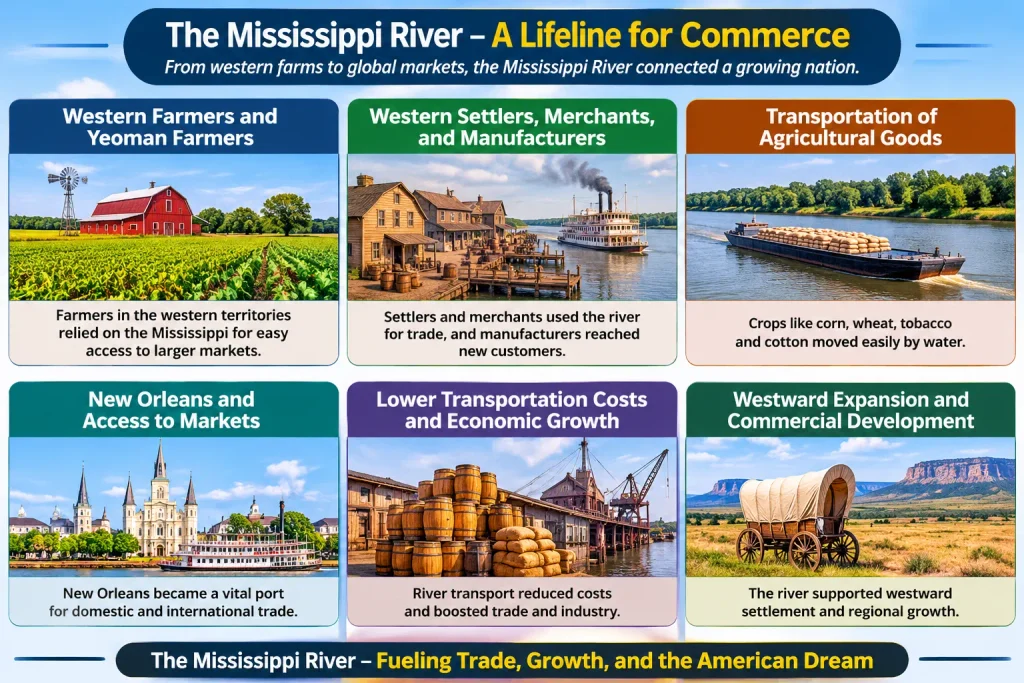
Table of Contents
Western Farmers and Yeoman Farmers
Western farmers and yeoman farmers were among the people who benefited most from opening the Mississippi River to commerce. Many small landowners lived in the western territories, where farming was an important source of income but access to distant markets remained difficult. Without a dependable transportation route, selling large quantities of crops beyond their local communities could be costly and time-consuming.
The Mississippi River provided these farmers with a direct water route toward New Orleans. Instead of relying entirely on slow overland transportation, they could move heavy agricultural products downstream by boat. This was particularly valuable for farmers producing corn, wheat, tobacco, cotton, and other agricultural products that were expensive to transport over long distances by land.
For yeoman farmers, who generally operated small family-owned farms, access to commercial markets meant better opportunities to sell their harvests and earn income. The river also connected agricultural communities in the interior with a much wider trading network. As a result, reliable navigation on the Mississippi became an important part of the economic prospects of farmers living west of the Appalachian Mountains.
Western Settlers, Merchants, and Manufacturers
Opening the Mississippi River to commerce was equally important to western settlers, merchants, and manufacturers who depended on reliable transportation and trade to support growing communities beyond the Appalachian Mountains. As settlements expanded across the western territories, people needed dependable ways to obtain supplies, exchange goods, and maintain connections with established markets. Difficult overland routes made these activities expensive and limited the movement of merchandise between western settlements and eastern commercial centers.
For western merchants, the river provided a valuable route for transporting and trading goods between interior communities and major commercial ports. They could use the Mississippi and its tributaries to move agricultural produce, manufactured products, and essential supplies. Manufacturers also benefited because improved river transportation made it easier to distribute their products to customers in distant settlements and bring raw materials and other goods into western communities.
Reliable access to the Mississippi River therefore supported more than individual businesses. It helped western settlements participate in regional commerce, encouraged the exchange of goods, and strengthened economic connections between the interior and the rest of the country.
Transportation of Agricultural Goods
The Mississippi River was especially valuable because it provided an efficient way to move large quantities of agricultural products from the western interior. Farmers and traders transported commodities such as corn, wheat, other grains, tobacco, and cotton along the river and its tributaries. These goods were often bulky and costly to haul over long distances by wagon, making water transportation a more practical option.
Boats carried agricultural produce downstream through the Mississippi River system, including tributaries such as the Ohio River, linking farming communities in the western interior with important trading centers. These connected waterways allowed goods from areas far beyond the Mississippi’s banks to reach the main river channel, giving producers and merchants a broader network for moving crops and participating in regional commerce.
By making the transportation of agricultural goods easier and more affordable, commercial navigation on the Mississippi helped connect the productive interior with the wider economy. It allowed more crops to enter trade and made the river one of the most important transportation routes for the agricultural development of the western United States.
New Orleans and Access to Markets
New Orleans was central to the commercial importance of the Mississippi River because of its location near the river’s mouth, where it meets the Gulf of Mexico. Opening the river to commerce gave farmers, merchants, and traders in the western interior a practical connection to this major port. From there, agricultural products and other goods could be transferred to ocean-going ships and transported to markets across the United States and overseas.
For western producers, access to New Orleans meant they were no longer dependent solely on nearby buyers or difficult overland routes to sell their goods. The port connected the Mississippi Valley with established domestic and international trading networks. Merchants could also bring imported merchandise and supplies through New Orleans and distribute them to communities along the river.
Control over access to this trade route was therefore a major concern for the young United States. The Pinckney’s Treaty of 1795 secured American ships the right to freely navigate the Mississippi River and granted American traders the right of deposit at New Orleans. This allowed them to store goods at the port and transfer them to ocean-going vessels for export without paying additional duties on the deposited merchandise. Later, the Louisiana Purchase of 1803 brought New Orleans and the lower Mississippi under U.S. control, strengthening the country’s position along this vital commercial route.
Lower Transportation Costs and Economic Growth
Opening the Mississippi River to commerce helped reduce the cost of transporting goods between the western interior and distant markets. Moving heavy agricultural produce overland required wagons, animals, labor, and considerable time. River transportation offered merchants and farmers a more economical way to move large shipments, making long-distance trade more practical and potentially more profitable.
Lower transportation costs also benefited consumers and businesses. Merchants could move merchandise and essential supplies between settlements more efficiently, while manufacturers gained better opportunities to obtain raw materials and distribute finished products. As trade became easier, communities along the Mississippi and its tributaries could participate more actively in the growing regional economy.
The increased movement of goods encouraged commercial activity in river towns and port cities, including St. Louis, Memphis, and New Orleans. These centers benefited from growing trade and the exchange of agricultural products, manufactured goods, and essential supplies.
Westward Expansion and Commercial Development
Opening the Mississippi River to commerce supported the growth of settlements across the western territories by giving communities a more dependable connection to the country’s commercial network. As migration continued westward, access to navigable waterways made it easier for settlers to establish farms, develop businesses, and maintain links with other parts of the country.
The river also increased the economic attractiveness of the Mississippi Valley. Communities with access to river transportation had better opportunities to participate in trade, attract merchants, and support growing local economies. This helped established settlements expand and encouraged further development throughout the interior.
By connecting the western territories with major commercial centers, the Mississippi River became an important part of the nation’s westward expansion. Its role in transportation and trade helped integrate the growing western population into the broader American economy.