Acadia Climate is shaped by the Atlantic Ocean, rugged coastline, and varying elevations of Acadia National Park in Maine. The park experiences four distinct seasons, ranging from cool, foggy springs and mild summers to colorful autumns and cold, snowy winters. Coastal fog, ocean breezes, strong winds, and rapidly changing weather are common features of the region, making conditions noticeably different between the shoreline and higher elevations such as Cadillac Mountain.
Temperatures and weather conditions can vary considerably throughout the year. Summer is generally the warmest and busiest season, while fall brings crisp air and vibrant foliage. Winter often brings snow, freezing temperatures, and powerful coastal storms. Understanding Acadia’s climate and seasonal weather patterns can help visitors choose the best time to explore the park and prepare for changing outdoor conditions.
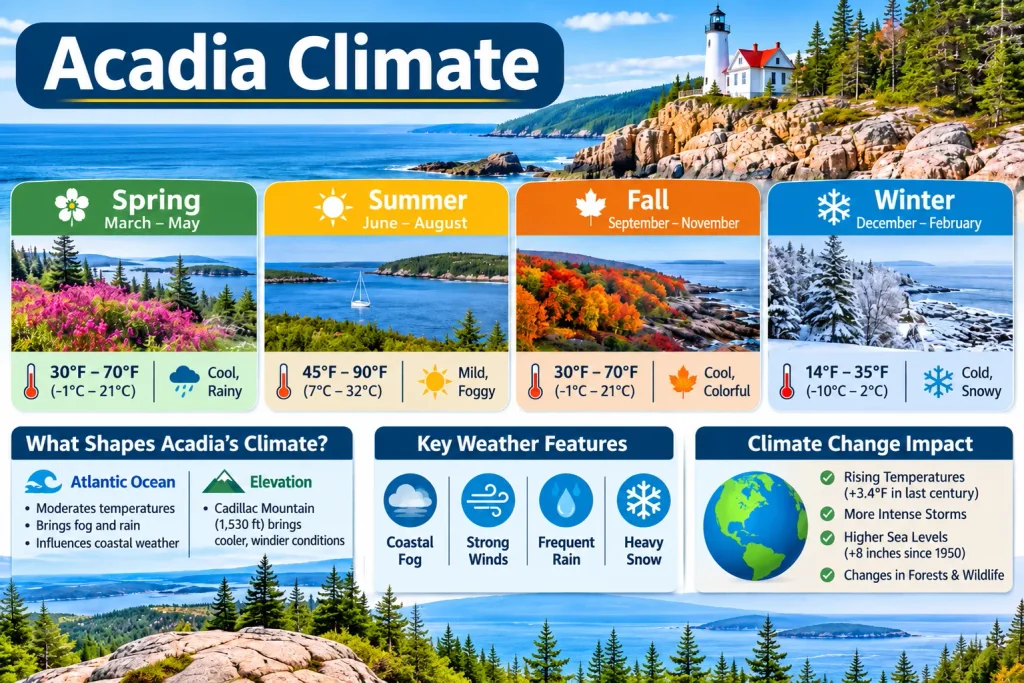
Table of Contents
Seasonal Weather and Temperatures in Acadia National Park
Temperatures in Acadia National Park vary considerably throughout the year, with seasonal changes influencing rainfall, snowfall, fog, and outdoor conditions. The Atlantic Ocean moderates temperatures, while higher elevations experience cooler and often windier weather.
The table below provides a general overview of seasonal temperature ranges in Acadia:
| Season | Typical Temperature Range |
|---|---|
| Spring (March–May) | 30°F–70°F (-1°C–21°C) |
| Summer (June–August) | 45°F–90°F (7°C–32°C) |
| Fall (September–November) | 30°F–70°F (-1°C–21°C) |
| Winter (December–February) | 14°F–35°F (-10°C–2°C) |
These ranges represent general seasonal conditions rather than daily averages or guaranteed highs and lows. Summer temperatures, in particular, can vary widely, and weather on Cadillac Mountain and other exposed peaks may be considerably different from conditions in Bar Harbor. Visitors should be prepared for sudden changes, including fog, rain, wind, and cooler temperatures even during summer.
Spring Weather in Acadia National Park
Spring in Acadia National Park lasts from March through May, bringing a gradual transition from cold winter conditions to milder coastal weather. March often remains chilly, with occasional snow and freezing conditions, while April and May become progressively warmer. Foggy mornings, rain, and rapidly changing weather are common throughout the season.
According to NOAA’s 1991–2020 climate normals recorded at its Acadia National Park weather station (470 feet elevation), average daytime highs and nighttime lows are approximately 42°F and 25°F (6°C and -4°C) in March, 53°F and 35°F (12°C and 2°C) in April, and 65°F and 45°F (18°C and 7°C) in May. These figures show how temperatures gradually rise as spring progresses, although actual conditions can vary from year to year.
Early spring can still bring snow, freezing rain, and icy conditions, particularly at higher elevations. Rain is also common, and coastal fog can reduce visibility along shorelines and mountain roads. By May, milder temperatures make outdoor activities more comfortable, but visitors should still prepare for cool mornings, occasional showers, and sudden weather changes.
Another seasonal consideration is the arrival of blackflies, which are usually most numerous from mid-May to mid-June. Their numbers can be higher after a rainy spring, making insect protection useful for hikers and other outdoor visitors. Wearing layers, carrying a rain jacket, and choosing suitable clothing can help visitors stay comfortable during Acadia’s unpredictable spring weather.
Summer Weather in Acadia National Park
Summer in Acadia National Park lasts from June through August and generally brings the warmest weather of the year. Unlike many inland areas of Maine, Acadia experiences relatively mild summer temperatures because of its coastal location and the cooling influence of the Atlantic Ocean. Daytime conditions are usually comfortable for hiking, sightseeing, camping, and other outdoor activities, although occasional heat waves can push temperatures close to 90°F (32°C).
According to NOAA’s 1991–2020 climate normals for Acadia National Park, average daytime highs and nighttime lows are approximately:
| Month | Average High | Average Low |
|---|---|---|
| June | 74°F (23°C) | 54°F (12°C) |
| July | 79°F (26°C) | 60°F (16°C) |
| August | 78°F (26°C) | 60°F (16°C) |
July is generally the warmest month, while June and August also offer pleasant conditions for exploring the park. Even during summer, evenings can feel cool, particularly near the shoreline and at higher elevations.
Fog is one of the most noticeable features of Acadia’s summer climate. It is common during June, July, and August, when warm, moist air encounters the cooler waters of the North Atlantic. Coastal areas, mountain viewpoints, and exposed shorelines can experience reduced visibility, sometimes changing from clear skies to dense fog within a short period. Rain is also possible throughout the season, so visitors should not assume that summer weather will remain sunny.
Ocean temperatures generally range from 50°F to 60°F (10°C to 16°C), making the Atlantic waters around Acadia noticeably colder than typical summer swimming conditions. Freshwater lakes are usually warmer, with temperatures ranging from approximately 55°F to 70°F (13°C to 21°C).
Summer is also the busiest visiting season in Acadia National Park. Visitors should plan for heavier traffic, crowded popular trails, and limited parking at major attractions. Lightweight clothing, a warm layer, rain protection, and suitable footwear are useful for dealing with changing weather throughout the day.
Fall Weather in Acadia National Park
Fall in Acadia National Park extends from September through November, bringing cooler temperatures, crisp air, and colorful foliage across the park’s forests and coastal landscapes. September often retains mild, summer-like conditions, while October brings noticeably cooler weather. By November, temperatures drop further, and visitors may encounter freezing nights, rain, strong winds, and occasional snow or flurries.
According to NOAA’s 1991–2020 climate normals for Acadia National Park, average daytime highs and nighttime lows are approximately:
| Month | Average High | Average Low |
|---|---|---|
| September | 71°F (22°C) | 53°F (12°C) |
| October | 59°F (15°C) | 43°F (6°C) |
| November | 48°F (9°C) | 33°F (1°C) |
October is particularly popular because of the autumn foliage. Acadia’s forests display shades of red, orange, and yellow as deciduous trees change color. The leaves begin turning in September, with peak fall foliage generally occurring around mid-October. However, the exact timing varies each year depending on weather conditions, including temperatures and rainfall.
Fall weather can change quickly, so visitors may experience sunny afternoons, cool mornings, coastal fog, and rain within the same day. November is generally colder and wetter than the earlier fall months, making warm clothing and rain protection increasingly important for outdoor activities.
Fall is also a popular time for hiking, photography, scenic drives, and enjoying the park’s autumn scenery. Visitors planning a trip around peak foliage should monitor Maine’s seasonal foliage reports because the timing of peak colors can vary from year to year.
Winter Weather in Acadia National Park
Winter in Acadia National Park lasts from December through February and brings cold temperatures, snowfall, icy conditions, and strong coastal winds. It is the coldest season of the year, with freezing temperatures common both during the day and at night. The park’s exposed coastline and mountain summits can feel particularly harsh because of wind chill and rapidly changing weather.
According to NOAA’s 1991–2020 climate normals for Acadia National Park, average daytime highs and nighttime lows are approximately:
| Month | Average High | Average Low |
|---|---|---|
| December | 38°F (3°C) | 22°F (-6°C) |
| January | 33°F (1°C) | 15°F (-9°C) |
| February | 35°F (2°C) | 18°F (-8°C) |
Snowfall is a regular feature of Acadia’s winter climate, although the amount varies considerably from year to year. Snow and ice can cover hiking trails, roads, and rocky shorelines, creating challenging conditions for visitors. Freezing rain and icy surfaces are also possible, particularly during periods when temperatures fluctuate around the freezing point.
Coastal storms known as nor’easters can bring strong winds, heavy precipitation, rough ocean conditions, and occasional blizzard-like weather to the region. These storms generally develop along the East Coast and can significantly affect travel and outdoor activities in and around Acadia. Exposed areas, including mountain summits and ocean-facing trails, are especially vulnerable to high winds and poor visibility.
Winter also changes how visitors can explore the park. Some roads and visitor facilities have seasonal closures, while snow-covered trails may be suitable for snowshoeing and cross-country skiing when conditions permit. Visitors should check current road conditions and park alerts before travelling, wear insulated clothing and appropriate footwear, and prepare for icy surfaces and sudden weather changes.
How Coastal Location and Elevation Affect Acadia’s Climate
Acadia National Park’s climate is strongly influenced by its location along the Atlantic coast and the varying elevations of Mount Desert Island. The surrounding ocean moderates temperatures, keeping the island generally cooler in summer and milder in winter than inland areas of Maine. However, coastal exposure also brings frequent fog, high humidity, rainfall, and strong winds, creating weather conditions that can change quickly.
Influence of the Atlantic Ocean
The Atlantic Ocean plays an important role in Acadia’s seasonal weather. During summer, relatively cool ocean waters help moderate daytime temperatures, while sea breezes provide relief from warmer conditions. The contrast between warm, moist air and cooler ocean water also contributes to frequent coastal fog, particularly during June, July, and August.
In winter, the ocean’s moderating influence generally keeps coastal temperatures from becoming as cold as those farther inland. However, storms moving along the northeastern coast can bring strong winds, heavy precipitation, rough seas, and rapidly changing weather. Rain is possible throughout the year, while freezing rain and ice storms are recurring features of winter and early spring.
How Elevation Changes Weather Conditions
Elevation creates another important difference in Acadia’s local climate. Cadillac Mountain, at 1,530 feet (466 meters), is the highest point on the eastern seaboard of the United States. Its summit is more exposed to wind, fog, and changing weather than lower-lying areas such as Bar Harbor.
Temperatures and weather conditions at the summit can differ dramatically from those along the Park Loop Road and elsewhere on Mount Desert Island. Even on a warm summer day, Cadillac Mountain may experience cold winds, rain, and dense fog. Higher elevations also experience harsher winter conditions, including snow, ice, and reduced visibility.
These coastal and elevation-related differences mean that visitors can encounter several types of weather within a relatively short distance. Checking local forecasts for both coastal areas and mountain summits, and carrying extra layers and rain protection, is important when exploring Acadia National Park.
How Climate Change Is Affecting Acadia National Park
Climate change is gradually altering the weather patterns, ecosystems, and coastal landscapes of Acadia National Park. Rising temperatures, increased precipitation, warmer ocean waters, rising sea levels, and more intense storms are affecting the park’s forests, lakes, wildlife, and historic infrastructure. These changes are also influencing seasonal conditions, including the timing of spring growth, autumn foliage, and winter snowfall.
According to Friends of Acadia, the park’s average annual temperature has increased by approximately 3.4°F over the past century, while average annual precipitation has risen by roughly 6 inches. The National Park Service’s climate research also identifies a significant warming trend and an increase in heavy rainfall across the region. These changes are contributing to warmer winters, longer growing seasons, and more frequent periods of intense rainfall.
Warmer Temperatures and Changing Seasons
Rising temperatures are making Acadia’s winters warmer and extending the growing season. Warmer conditions can reduce snowpack, shorten the period when lakes and ponds remain frozen, and affect plants and animals adapted to colder environments. Earlier springs and later autumns are also changing the seasonal timing of plant growth and wildlife activity.
Cold-adapted trees, including red spruce, face increasing stress from warmer winters, summer droughts, and changing growing conditions. Over time, these pressures may alter the composition of Acadia’s forests and allow species better adapted to warmer climates to become more common.
Increased Rainfall and Stronger Storms
Acadia has experienced an increase in annual precipitation, along with more frequent intense rainfall events. Heavy storms can cause flooding, soil erosion, and damage to roads, hiking trails, streams, and historic carriage roads. A major storm in June 2021 dropped more than 5 inches of rain in less than three hours, causing extensive damage to the park’s infrastructure.
Warmer conditions also mean that a greater share of winter precipitation may fall as rain rather than snow. Reduced snowpack and more intense rainfall can change stream flows, increase erosion, and affect freshwater habitats.
Rising Ocean Temperatures and Sea Levels
The Gulf of Maine, which surrounds Acadia National Park, has warmed by approximately 3°F over the past century, according to Friends of Acadia and the National Park Service. Warmer ocean waters contribute to marine heat waves and can change the distribution, feeding patterns, and migration of marine species. These changes also affect coastal habitats, including tide pools.
Sea levels along the coast have risen by approximately 8 inches since 1950. Rising water levels, combined with stronger coastal storms, increase the risk of shoreline erosion and damage to coastal habitats and cultural resources. Ocean acidification is another concern because it makes it more difficult for shell-forming organisms, such as clams and snails, to build and maintain their shells.
Effects on Forests and Wildlife
Changing temperatures and precipitation patterns are affecting the plants and animals that make up Acadia’s ecosystems. Native plant communities are shifting, while invasive species, pests, and diseases can spread more easily into areas where environmental conditions have changed. Red spruce forests are particularly vulnerable to warmer winters and summer drought stress.
Wildlife is also responding to changing conditions. Warmer ocean temperatures can affect marine food webs, while shifts in seasonal temperatures influence breeding patterns, migration, and food availability for birds and other animals. These changes may gradually alter the biodiversity and ecological balance of the park.
Climate change is expected to continue influencing Acadia’s weather and natural systems over the coming decades. The National Park Service is monitoring these changes and working with conservation partners to improve the resilience of forests, wetlands, coastal habitats, and historic infrastructure.