Sand Beach is one of the most iconic and picturesque destinations in Acadia National Park, attracting visitors with its rare stretch of light-colored shell-sand, dramatic granite cliffs, and breathtaking Atlantic Ocean scenery. Located on the eastern side of Mount Desert Island in Maine, this small crescent-shaped beach offers a striking contrast to the state’s rugged, rocky coastline. Whether you’re looking to relax by the ocean, photograph a spectacular sunrise, hike some of Acadia’s most famous trails, or simply enjoy the sound of crashing waves, Sand Beach delivers an unforgettable coastal experience.

Unlike most beaches in Maine, which are covered with cobblestones or exposed bedrock, Sand Beach is composed primarily of tiny shell fragments that have been broken down by centuries of wave action. The result is a beautiful natural beach tucked inside the sheltered waters of Newport Cove, surrounded by towering pink granite headlands and evergreen forests.
Its location along the scenic Park Loop Road makes Sand Beach one of the easiest coastal attractions to visit in Acadia National Park. It also provides convenient access to several famous hiking trails, including Ocean Path and Great Head Trail, while the Beehive Trail begins just across the road. Gorham Mountain Trail is another popular nearby hike, with its trailhead located farther along Park Loop Road. Whether you’re visiting for an hour or spending an entire day exploring the coastline, Sand Beach is one of the park’s must-see attractions.
Table of Contents
Where Is Sand Beach Located?
Sand Beach is located on the eastern coast of Mount Desert Island within Acadia National Park in Maine. It sits inside Newport Cove, which is partly enclosed by Great Head to the east, a rocky ledge known as Old Soaker to the south, and cliffs to the west. This sheltered setting helps fine sand accumulate along the shoreline.

The beach is situated directly along Acadia’s famous 27-mile Park Loop Road, making it one of the first major attractions encountered by visitors exploring the eastern section of the park. Its central location also places it just a short distance from several other iconic destinations, including Thunder Hole, Otter Cliff, and Cadillac Mountain.
Despite measuring only about 290 yards (265 meters) in length, Sand Beach is considered the largest natural sandy beach within Acadia National Park and one of the most photographed coastal locations in New England.
Why Is Sand Beach So Unique?
Sand Beach stands out because it is exceptionally rare along Maine’s rugged coastline. Most of the state’s shoreline consists of rocky cliffs, granite ledges, and cobblestone beaches, making this small stretch of soft sand a geological curiosity.
Unlike many beaches that are dominated by quartz grains, Sand Beach contains a high proportion of broken shell material. Waves carry shell fragments into Newport Cove, where the cove’s shallow slope and sheltered conditions allow fine sediment to accumulate. The rocky ledge known as Old Soaker also helps reduce wave energy, allowing the sand to remain along the shoreline.
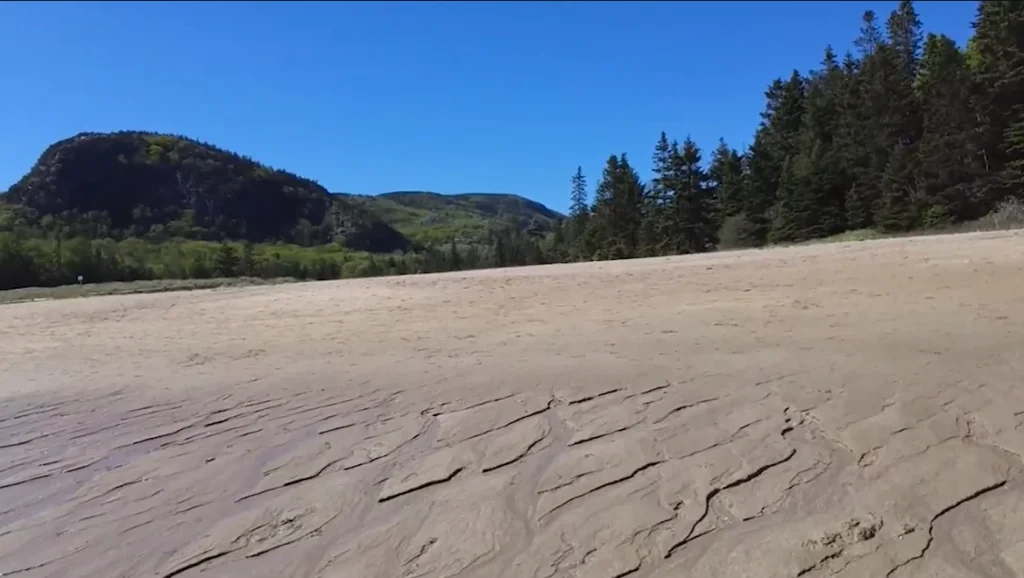
The surrounding landscape adds to its uniqueness. Towering granite cliffs rise on both sides of the cove, evergreen forests extend almost to the shoreline, and the Atlantic Ocean provides a constant backdrop of rolling surf and sea breezes. The contrast between the light-colored shell-sand, rugged cliffs, and deep blue ocean creates one of Acadia’s most recognizable landscapes.
Another defining feature is the water temperature. Even during summer, the Atlantic Ocean at Sand Beach remains cold, with normal water temperatures generally ranging from 50–60°F (10–15°C). The cold water reflects the influence of the Labrador Current and deeper ocean currents, making swimming much colder than many visitors expect.
Throughout the year, Sand Beach changes dramatically with the seasons. Summer brings beachgoers and hikers, autumn surrounds the cove with brilliant fall colors, while winter transforms the shoreline into a dramatic landscape where crashing waves meet snow-covered granite cliffs.
Things to Do at Sand Beach
1. Relax on the Beach
Many visitors simply come to enjoy the peaceful coastal scenery. The protected cove, light-colored shell-sand, and surrounding cliffs create an ideal place to sit, picnic, read a book, or watch the Atlantic waves roll ashore. During the summer months, the beach becomes one of Acadia’s most popular gathering spots, while spring and autumn offer a quieter atmosphere.
2. Swimming
Although Sand Beach looks inviting, swimming here is very different from swimming at most ocean beaches. Normal water temperatures generally range from 50–60°F (10–15°C), even during summer. Seasonal lifeguards may be present from early June through Labor Day, but visitors are responsible for their own safety. Cold-water shock, strong tides, slippery rocks, and occasional rough surf make caution essential. Many visitors choose to wade along the shoreline rather than spend extended periods in the water.
3. Watch the Sunrise
While Cadillac Mountain is famous for sunrise, Sand Beach offers one of the park’s most peaceful sunrise experiences. Facing east across the Atlantic Ocean, the beach provides an unobstructed view as the first light of day illuminates the granite cliffs, calm waves, and surrounding forests. Early morning also brings cooler temperatures, fewer visitors, and excellent opportunities for photography.
4. Photography
Sand Beach is one of the most photogenic locations in Acadia National Park. Photographers are drawn to the contrast between the light-colored shell-sand, pink granite cliffs, evergreen forests, and deep blue Atlantic Ocean. Each season offers different photographic opportunities, from colorful autumn foliage and dramatic winter storms to calm summer mornings filled with soft golden light.
5. Enjoy the Coastal Scenery
Visitors can enjoy Sand Beach even when they do not plan to swim or hike. The shoreline offers views of the surrounding granite headlands, offshore waters, and forested slopes. At low tide, the edges of the beach also provide opportunities to observe small coastal organisms in the intertidal zone. These natural features make the area worth exploring at a relaxed pace.
Hiking Trails Near Sand Beach
Sand Beach is more than just a beautiful beach—it’s also one of the main gateways to Acadia National Park’s coastal trail network. Several of the park’s most popular hikes begin within walking distance of the beach, allowing visitors to combine ocean scenery with mountain viewpoints and rugged granite landscapes.
1. Ocean Path
Ocean Path is one of Acadia’s easiest and most scenic walks. Beginning near the Sand Beach parking area, this mostly level trail follows the rocky coastline for approximately 2.2 miles (3.5 km) one way to Otter Point. Along the route, visitors pass some of the park’s best-known landmarks, including Thunder Hole, Monument Cove, and Otter Cliff. Nearly every section of the trail offers spectacular views of the Atlantic Ocean crashing against Acadia’s pink granite shoreline. Because of its gentle terrain and outstanding scenery, Ocean Path is suitable for families, casual walkers, and photographers.
2. Great Head Trail
At the eastern end of Sand Beach, the Great Head Trail climbs onto a forested granite peninsula overlooking Newport Cove. The longer loop is approximately 1.9 miles (3.1 km) round trip, with a shorter route of about 1.3 miles (2.1 km). The trail includes rocky sections and short, steep climbs, rewarding hikers with views of Sand Beach, the Atlantic Ocean, and the surrounding coastline.
The trail passes through quiet forests before emerging onto exposed granite cliffs where visitors can enjoy one of the finest elevated views of the beach. Compared to some of Acadia’s more famous hikes, Great Head usually receives fewer visitors, making it a peaceful alternative for those seeking spectacular coastal scenery.
3. Beehive Trail
Located directly across Park Loop Road from Sand Beach, the Beehive Trail is one of Acadia National Park’s signature adventures. Although the hike is relatively short, it features steep granite slabs, exposed ledges, and iron rungs bolted directly into the rock. The climb is physically demanding and not recommended for visitors with a fear of heights. However, those who reach the summit are rewarded with breathtaking panoramic views overlooking Sand Beach, Great Head, Frenchman Bay, and the surrounding mountains.
4. Gorham Mountain Trail
Gorham Mountain Trail offers a less exposed alternative to the Beehive Trail, although it still includes rocky and uneven sections. Its trailhead is farther along Park Loop Road from Sand Beach. The loop climbs through forest and over open granite slopes before reaching the summit of Gorham Mountain. The hike offers sweeping views of the Atlantic coastline, Otter Cliff, Thunder Hole, and Mount Desert Island’s rugged landscape without requiring hikers to navigate ladders or steep cliff faces.
Wildlife and Natural Environment
Although Sand Beach is best known for its scenery, it also supports a diverse coastal ecosystem. The surrounding granite cliffs, evergreen forests, rocky tide pools, and Atlantic waters provide habitat for a wide variety of plants and wildlife.
Along the shoreline, visitors commonly see gulls, cormorants, and other seabirds gliding above the waves. Bald eagles and ospreys are occasionally spotted soaring overhead, especially during quieter times of the day. Harbor seals may sometimes be seen resting on offshore rocks or swimming just beyond the surf.
During low tide, the rocky edges of the beach reveal small tide pools where visitors can observe crabs, snails, mussels, sea stars, and other marine organisms. These fragile habitats are an important part of Acadia’s coastal ecosystem and should be explored carefully without disturbing the wildlife.
Behind the beach, dense forests of spruce and fir provide shelter for songbirds, squirrels, foxes, and white-tailed deer. Throughout the changing seasons, the landscape transforms dramatically, from lush green forests in summer to brilliant shades of red, orange, and gold during autumn.
Because Sand Beach is one of Acadia’s most visited locations, visitors are encouraged to stay on designated trails, avoid disturbing wildlife, and follow Leave No Trace principles to help preserve this unique environment.
Visitor Information
Sand Beach is one of the busiest destinations in Acadia National Park, so planning ahead can make your visit much more enjoyable.
Parking: The Sand Beach parking lot regularly fills during summer, often by 9:00 a.m. Arriving early in the morning can improve your chances of finding a space. The lot has approximately 101 spaces and does not accommodate buses, RVs, or trailers. If it is full, follow ranger instructions and use only designated roadside parking where permitted.
Facilities: Visitors will find restrooms, changing areas, drinking water bottle refill stations, and foot-rinsing faucets near the upper parking area. These amenities make Sand Beach one of the park’s most convenient day-use areas.
Accessibility: While the upper parking area and visitor facilities are wheelchair accessible, the beach itself is not. Reaching the shoreline requires descending a staircase with approximately 37 steps and several landings.
Island Explorer Shuttle: During the operating season, the fare-free Island Explorer Shuttle provides service to Sand Beach. Routes 3 and 4 serve the area, offering an alternative to driving and searching for limited parking. Check the current timetable for departure locations and service frequency.
Pet Restrictions: Pets are not permitted on Sand Beach from June 15 through September 15. Outside this restricted period, pets must follow Acadia National Park’s leash and other pet regulations.
Safety Tips: Atlantic waters remain dangerously cold even during summer. Visitors should watch for strong currents, changing tides, slippery rocks, and unexpected rogue waves. Always supervise children closely, stay behind safety barriers near cliffs, and avoid climbing on wet coastal rocks.
Best Time to Visit Sand Beach
Sand Beach is beautiful throughout the year, but each season offers a different experience.
Summer is the most popular time to visit, with warm weather, full visitor services, shuttle access, and ideal conditions for hiking. However, it is also the busiest season, making early morning visits the best option for avoiding crowds.
Autumn transforms the surrounding forests into brilliant shades of red, orange, and yellow, creating one of Acadia’s most photogenic landscapes. Cooler temperatures and fewer visitors make fall one of the best seasons for hiking and photography.
Spring offers peaceful scenery, blooming wildflowers, and excellent wildlife viewing, although ocean temperatures remain extremely cold.
Winter presents an entirely different atmosphere. Snow-covered granite cliffs, dramatic Atlantic waves, and quiet trails create a spectacular coastal landscape for visitors prepared for cold weather.
No matter the season, visiting early in the morning provides the best lighting, easier parking, and a more peaceful experience at one of Acadia National Park’s most iconic destinations.
Before your visit, check the latest weather forecast, tide conditions, and seasonal alerts issued by the National Park Service. Ocean conditions can change quickly, and temporary trail closures, rough surf, or severe weather may affect access, hiking plans, and visitor safety.